
Changing the roof of your property in Andorra: Everything you need to know
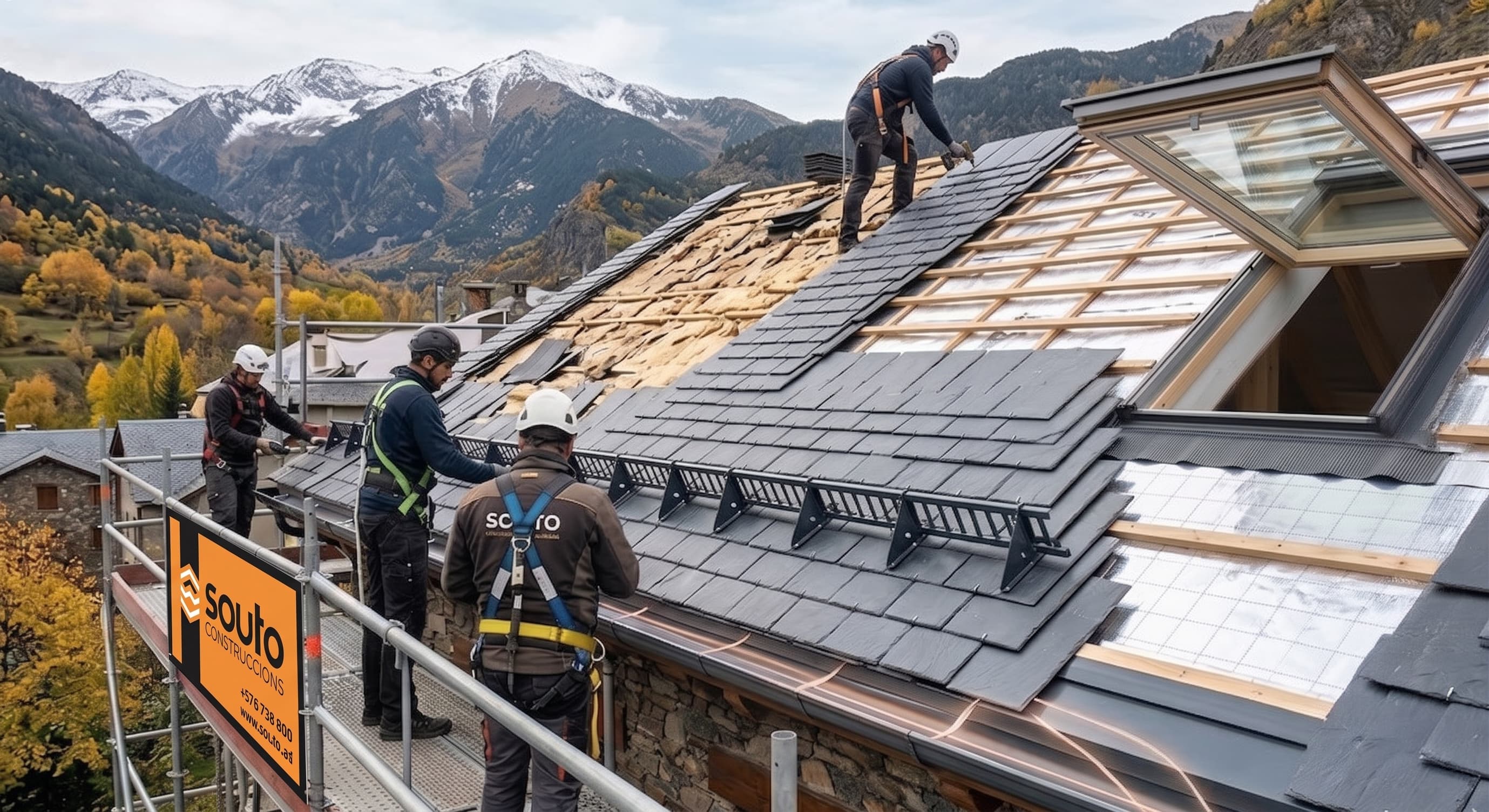
The roof is the most exposed part of any building and the one that ensures your home remains safe, dry, and efficient. In Andorra, the combination of accumulated snow, overnight frosts, and high winds makes maintaining or replacing the roof one of the most strategic investments for any homeowner.
At Souto, we are specialists in high-mountain roofing. If you are planning a project of this kind in 2026, here are the fundamental factors to ensure a job well done that lasts.
1. Thermal Insulation: The Absolute Priority
A new roof is a golden opportunity to improve your home's energy efficiency. Did you know that up to 30% of a home's heat escapes through a poorly insulated roof?
- Modern Systems: It’s no longer just about laying a layer of rock wool. In 2026, we use high-density insulation panels that offer a total thermal bridge break, drastically reducing your heating bill and improving climate comfort.
2. Material Choice: Slate and Safety
In Andorra, urban regulations generally require the use of slate, but not all slate is of the same quality, nor is it installed in the same way:
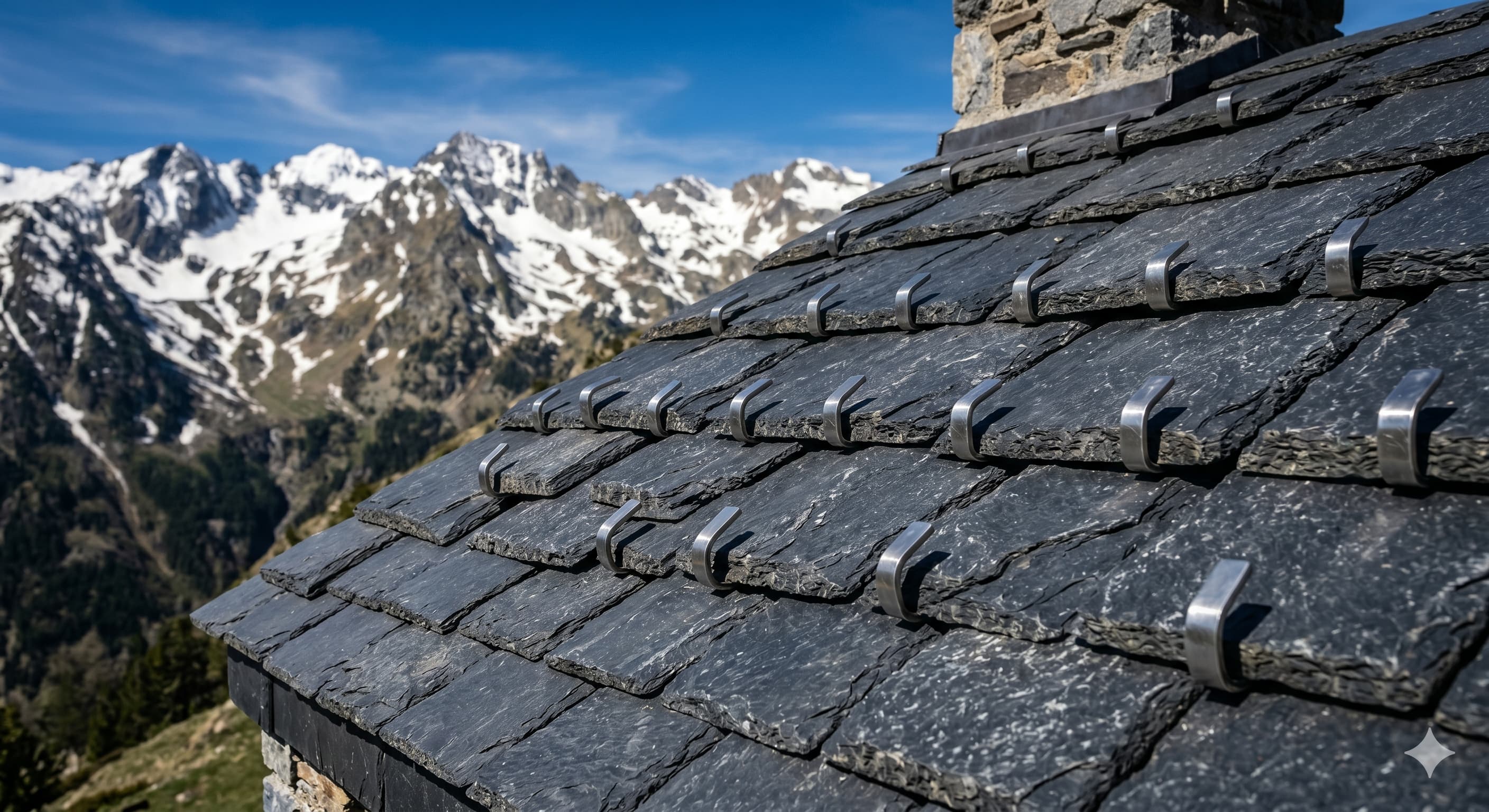
- Thickness and Fastening: To withstand heavy snow loads, it is vital that the pieces have the appropriate thickness and are secured with premium stainless steel hooks; this prevents them from coming loose during freeze-thaw cycles.
- Waterproofing: Underneath the slate, it is mandatory to install a state-of-the-art breathable membrane that blocks water ingress while allowing interior moisture to escape, preventing condensation and mold.
3. Weight and Snow Management: Snow Guards and Gutters
A roof in Andorra must be an active structure prepared for the alpine climate. During your renovation, we must include:
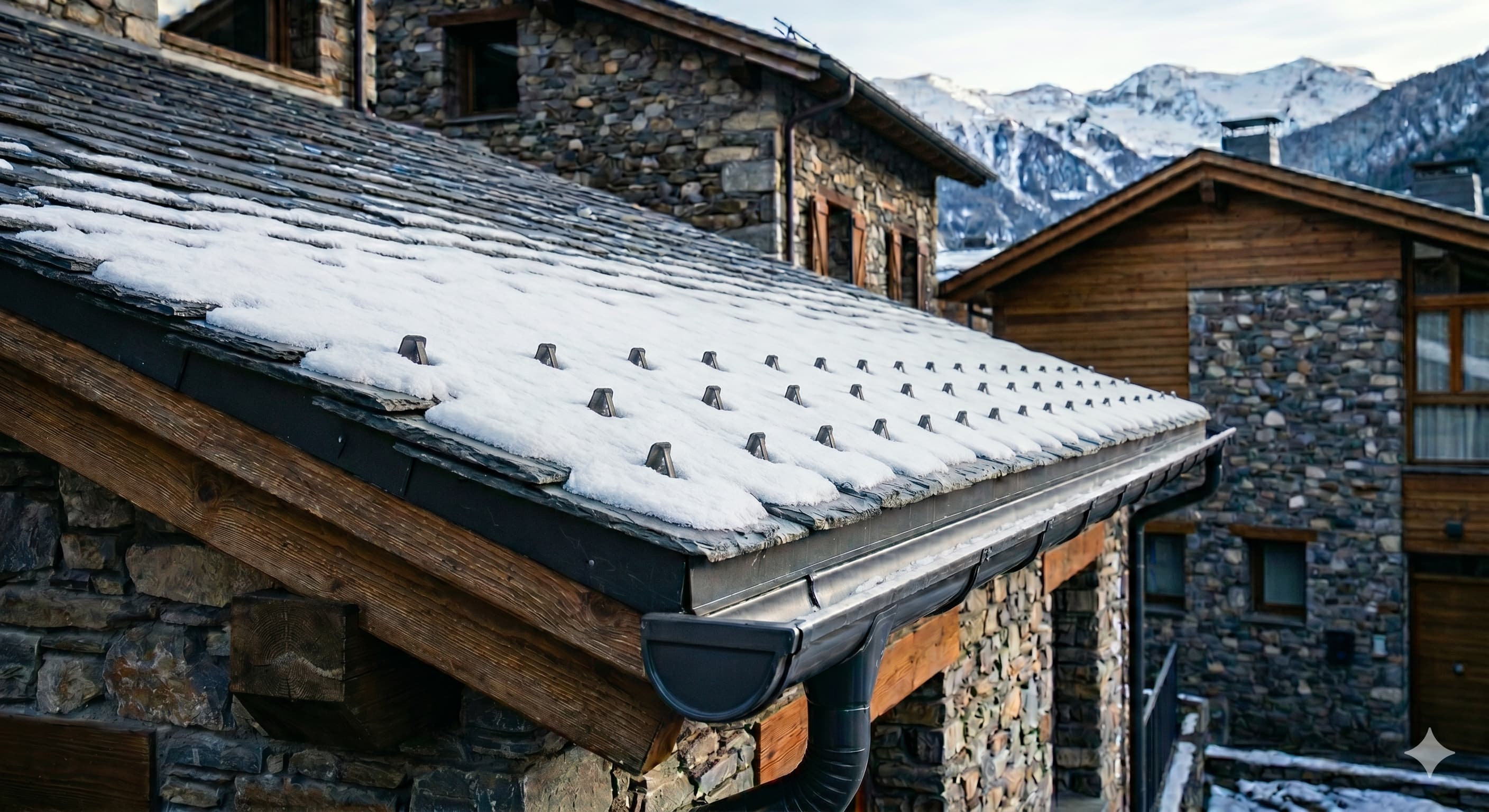
- Snow Guards (Snow Stoppers): These are essential to prevent snow slabs from sliding and falling suddenly onto the public road or the house porch, ensuring the safety of pedestrians and vehicles.
- Heated Gutters: A smart option for 2026 is the installation of heat cables in the drainage gutters. This prevents water from freezing and bursting pipes or creating dangerous icicles during the coldest winter months.
4. Regulations and Building Licenses
Changing a roof often involves modifying the structure or the building's aesthetics, which requires several procedures:
- Technical Project: In many cases, an architect's validation and a permit from the corresponding local council (Comú) are required.
- Health and Safety: Given the height and pitch of roofs in the Principality, the use of scaffolding and safety measures for workers are mandatory and extremely strict.
5. Roof Windows: Gaining Light and Ventilation
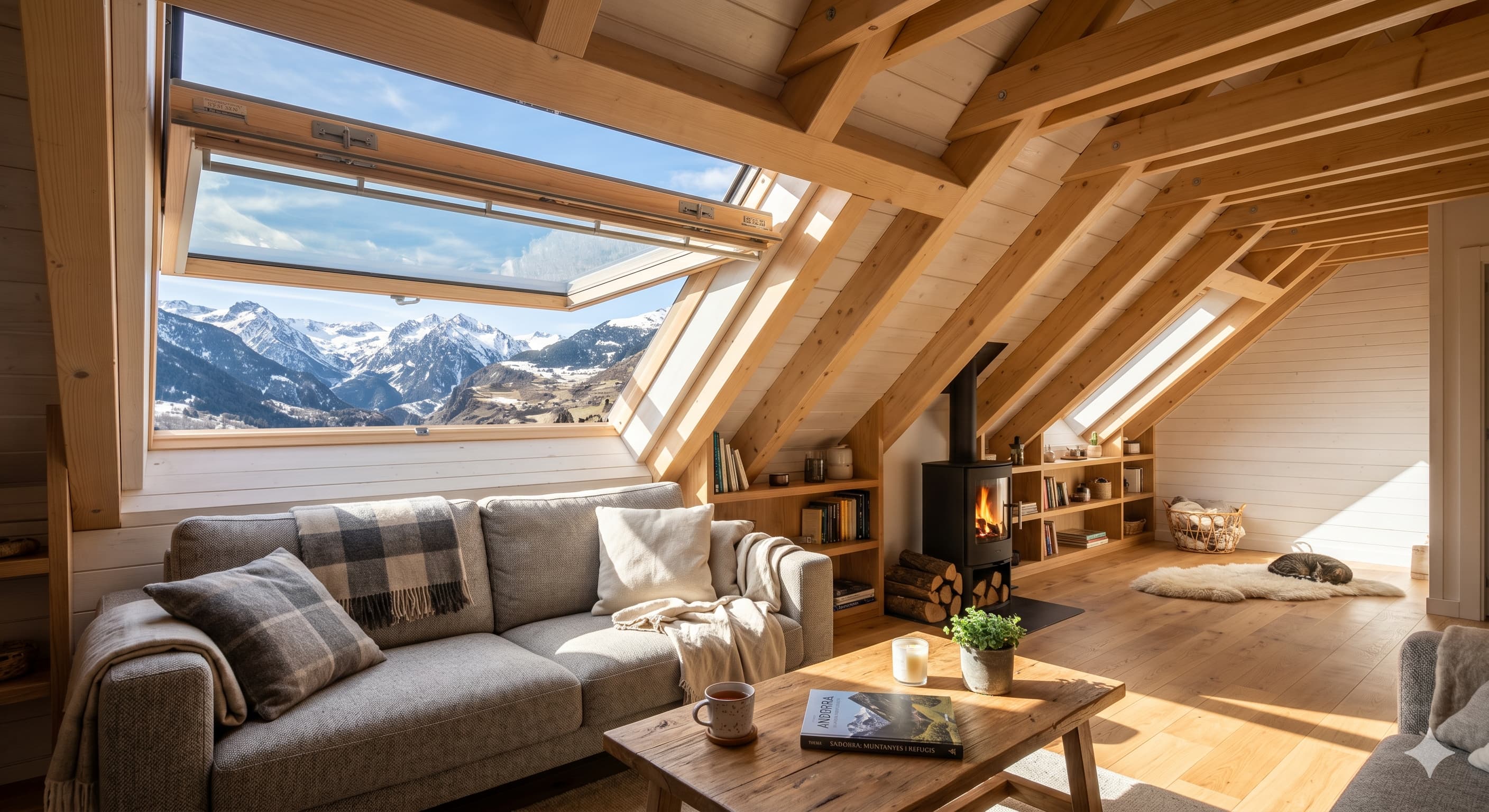
If you are opening up the roof, it is the perfect time to think about natural lighting. The new "Velux" style windows for 2026 include automatic closing sensors for rain and triple glazing to ensure no heat loss, turning the attic into the most prized space in the house.
Souto’s Tip: A cheap roof becomes expensive during the first heavy snowfall. Never compromise on the quality of the waterproofing membrane or the density of the insulation; these are the invisible elements that truly protect your home.
Are you dealing with leaks or looking to improve your roof’s insulation?
At Souto, we handle the entire process, from scaffolding management to the very last slate tile. Shall we discuss your roof?